|
THE TAJ WAS DESIGNED BY AN
ITALIAN ARCHITECT
Some European scholars held the view that the Taj
was designed by an Italian - Geronimo Veroneo. This was first
suggested by Father Manrique, an Augustinian Friar, who came
to Agra in 1640 A.D. to secure the release of Father Antony
who had been imprisoned by the Mughals. It was in Lahore that he
met Father Joseph de Castro, the executor of Veroneo who died at
Lahore in 1640 A.D., and it was Castro who told him about "the
Venetian by the name 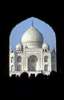 Geronimo
Veroneo who came in the Portuguese ships and died in the city of
Lahore before he reached it..." Geronimo
Veroneo who came in the Portuguese ships and died in the city of
Lahore before he reached it..."
During the reign of Jehangir, a goldsmith named Veroneo did in fact
come to India and, as mentioned by Father Manrique, did die on his
way to Lahore. He lived for a time in Agra, and prospered there.
He knew many influential Europeans throughout the North Indian provinces,
and when he died, he was buried in the Christian cemetery of Padres
Santos in Agra.
However, nowhere else is mention made of Veroneo's participation
in planning the Taj Mahal. As a matter of fact, there is no record
that Veroneo had any skill other than that of working gold.
Other Europeans who saw the Taj under construction never mentioned
his name, and furthermore, it is difficult to suppose that an artist
trained in seventeenth century Italy, the Italy of Bernini, could
build a mausoleum that would typify Indo-Persian architecture. The
Taj is not an isolated phenomenon, the creation of a single mastermind
but the glorious consummation of a great epoch of art.
 
|