|
-- construction continued --
Secrets of the Construction of the Ming Wall
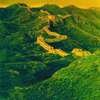
The Ming period pushed wall-building technologies
to the limit. The Ming wall snakes acrobatically across some
of China's most forbidding terrain, rising in places at an angle
of 70 degrees.
 The
Ming Wall was built mainly of brick, stone or the two materials
in mixture. The wall body was surfaced with bricks or long narrow
stones; the chinks were filled with lime mortar so even and tight
that grass and shrubs were difficult to root in them; along the
top, a channel was opened to drain rain water and protect the wall. The
Ming Wall was built mainly of brick, stone or the two materials
in mixture. The wall body was surfaced with bricks or long narrow
stones; the chinks were filled with lime mortar so even and tight
that grass and shrubs were difficult to root in them; along the
top, a channel was opened to drain rain water and protect the wall.
While in the Loess Plateau region of northwestern
China, the Ming Wall was largely built of rammed earth or adobe,
comparable to brick and stone in solid durability. For example,
the Jiayuguan section in Gansu was made of loess specially carried
from Heishan Hill some dozen km west of the Pass; the earth was
tamped compact with ram impressions tightly connected with each
other so as to prevent the wall body from deformation and break.
Such dramatic engineering wouldn't have been possible
without the Ming's advanced brick-making technology. At a time when
European builders were still relying upon cumbersome cut stone,
the Ming were using state-of-the-art kilns to mass produce bricks,
which were as strong as modern-day masonry blocks.
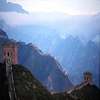 Along
the Great Wall, castles were built at road intersections of strategic
significance, dangerous defiles and junctions between the mountain
and the seaboard for transportation and defense purpose. When
the wall crossed over a river, a water gate would be constructed
beneath the wall body to let the stream flow on. Along
the Great Wall, castles were built at road intersections of strategic
significance, dangerous defiles and junctions between the mountain
and the seaboard for transportation and defense purpose. When
the wall crossed over a river, a water gate would be constructed
beneath the wall body to let the stream flow on.
 
|