|
-- history continued --
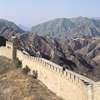 Wall
of Ming Wall
of Ming
Like their predecessors, the Ming rulers considered
a powerful Great Wall almost the only means of resisting the nomadic
invaders. Historians share the opinion that the Great Wall was
finally completed under the Ming.
Ming emperors appointed trusted ministers to supervise
the wall project. For example, the famous general, Xu Da, was
sent to build Juyong Pass, Gubeikou Pass and other strongholds at
the very beginning of the dynasty. The Ming wall was basically
completed in about 100 years. It covered some 7,300 kilometres,
stretching from the Yalu River on the east to Jiayu Pass on the
west. The section from the Yalu River to Shanhai Pass, however,
which had a length of almost 1,000 kilometres, was built of stone
and earth and was not as well constructed as some other sections.
Today it has become largely dilapidated or even untraceable. This
has given rise to the common misconception that Shanhai Pass
is the eastern end of the Great Wall.
For effective defence along the northern frontiers,
the Ming authorities divided the entire Great Wall belt into
nine zones and placed each under the control of a zhen (garrison
headquarters) Two more garrison headquarters were added later.
As the symbol of the Chinese nation and crystallization
of the wisdom of ancient Chinese, the Great Wall extends for
about 5 thousand kilometers from east to west. Like a gigantic
dragon winding across deserts, grasslands and mountains, the great
wall draws a stream of adventurers, explorers, sightseers, and those
who cherish the past. Although lengthy sections of the wall are
now in ruins or have disappeared completely, it is still one of
the more remarkable structures on earth. The Great Wall was added
to the UNESCO World Heritage List in 1987.
 
|
 |