On that 539 prayer carpets have been neatly marked out
with black marble. All over there is exquisite calligraphy and the name
Allah and quotations from scriptures inscribed. The 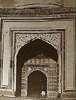 ceiling
is painted in a repeating design. The roof supports four octagonal towers
and three elegant domes. On either side of the Mosque, to the north
and south, and set along and upon the enclosure wall, there are two
towers.
ceiling
is painted in a repeating design. The roof supports four octagonal towers
and three elegant domes. On either side of the Mosque, to the north
and south, and set along and upon the enclosure wall, there are two
towers.
On the east side of the Taj stands a twin of the Mosque; a parallel
structure also made of red sandstone, referred to as the Jawab, or "answer".
Because it faced away from the Mecca, it was never used for prayer.
No one is quite sure what it was used for. Some speculate it was a resting
place for visitors or a meeting hall before prayers. Some even say its
purpose was purely architectural, to counterbalance the Mosque and 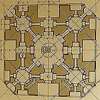 preserve
the symmetry of the entire design on the Taj complex. The Jawab is similar
to the Mosque, but instead of
preserve
the symmetry of the entire design on the Taj complex. The Jawab is similar
to the Mosque, but instead of  Quranic
inscriptions contains flower designs and other decorations in white
marble on the red sandstone background.
Quranic
inscriptions contains flower designs and other decorations in white
marble on the red sandstone background.
The origin of the name "Taj Mahal" is not clear. Court histories
from Shah Jehan's reign only call it the Rauza (tomb) of Mumtaz Mahal.
It is generally believed that "Taj Mahal" (usually translated
as either "Crown Palace" or "Crown of the Palace")
is an abbreviated version of her nickname, Mumtaz Mahal.
What is certain however is that the theTaj Mahal's immense beauty will
remain an immortal memory to all as it was intended. Shah Jehan's promise
fulfilled, the world will never forget Arjumand Banu Begum or her last
palatial resting place.