|
Unlike stone cave temples in China and India, Sokkuram
Grotto(National Treasures No.24) is manmade. It was constructed
in 751 at the same time as Pulguksa Temple. It has been
repaired on several occasions, the latest from 1962 to 1964
to prevent erosion. It sets on top of Mt. T'ohamsan, which
forms a natural barrier protecting Shilla from foreign invaders.
The temple faces the sea to the East, and it was customary
for offerings to be made here to pray for the safety and
prosperity of the nation.
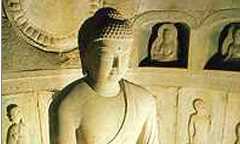
Sokkuram consists of a main domed hall, a small square
anteroom and a fan-shaped connecting corridor. The principal
statue of the temple is seated cross-legged on an octagonal
base in the center of the shrine. It is the only cave-temple
in East Asia where the main figure is suited for circumambulation.
It towers above the worshipper in complete harmony and serenity.
The two slits for eyes; the gentle eyebrows; the protuberance
on top of the head and the elongated ears, both symbolizing
wisdom; the light-emitting curl of hair between the eyes,
the three folds of the neck and the mudra, or hand gesture,
of "calling the Earth to Witness," all combine to represent
the sublime state of enlightment. It is indoubtedly the
most magnificent work of Korean sculpture and is considered
by many the greatest art treasure in East Asia. The main
figure is surrounded by 39 Boddhisattvas, ten disciples,
devas and guardian kings. Together they symbolize th Pure
Land in which the Buddha resides.
|