The Craftsmanship:
The seventeenth century saw a marked decline in the use of red sandstone
and pale cream marble
in Mughal buildings. Instead, Shah Jahan's reign saw the purest white
marble inlaid with exquisite pietra dura work, gain favour with the
architects. Records testify to the fact that the white marble came from
Rajasthan, yellow from the banks of R. Narmada, crystal from China,
lapis lazuli from Sri Lanka and other precious stone from the middle
east.In the fineness of carving and inlay work, the Taj has no competition.
It is said that the quality of pietra dura work is such that one can
pass a needle over it without jerking the hand even the slightest bit.
The most delicate designs and inscriptions have been incorporated in
the main structure and the screens. Such
is the craftsmanship that in many places more than 48 shades of the
same colour have been used in creating the flower petals, leaves and
the tendrils!Truly, the Taj Mahal might as well have been designed as
an abode for heavenly creatures. Mere words and pictures can never do
justice to one of the architectural wonders of the world.
Disclaimer: Although we've tried to make
the information on this web site as accurate as possible, we accept no responsibility
for any loss, injury or inconvenience sustained by any person resulting from information
published on this site. We encourage you to verify any critical information with
the relevant authorities before you travel.









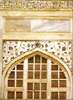 marble
in Mughal buildings. Instead, Shah Jahan's reign saw the purest white
marble inlaid with exquisite pietra dura work, gain favour with the
architects. Records testify to the fact that the white marble came from
Rajasthan, yellow from the banks of R. Narmada, crystal from China,
lapis lazuli from Sri Lanka and other precious stone from the middle
east.In the fineness of carving and inlay work, the Taj has no competition.
It is said that the quality of pietra dura work is such that one can
pass a needle over it without jerking the hand even the slightest bit.
The most delicate designs and inscriptions have been incorporated in
the main structure and the screens.
marble
in Mughal buildings. Instead, Shah Jahan's reign saw the purest white
marble inlaid with exquisite pietra dura work, gain favour with the
architects. Records testify to the fact that the white marble came from
Rajasthan, yellow from the banks of R. Narmada, crystal from China,
lapis lazuli from Sri Lanka and other precious stone from the middle
east.In the fineness of carving and inlay work, the Taj has no competition.
It is said that the quality of pietra dura work is such that one can
pass a needle over it without jerking the hand even the slightest bit.
The most delicate designs and inscriptions have been incorporated in
the main structure and the screens. 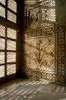 Such
is the craftsmanship that in many places more than 48 shades of the
same colour have been used in creating the flower petals, leaves and
the tendrils!Truly, the Taj Mahal might as well have been designed as
an abode for heavenly creatures. Mere words and pictures can never do
justice to one of the architectural wonders of the world.
Such
is the craftsmanship that in many places more than 48 shades of the
same colour have been used in creating the flower petals, leaves and
the tendrils!Truly, the Taj Mahal might as well have been designed as
an abode for heavenly creatures. Mere words and pictures can never do
justice to one of the architectural wonders of the world.


